
PLURAL
WOMEN SPACES
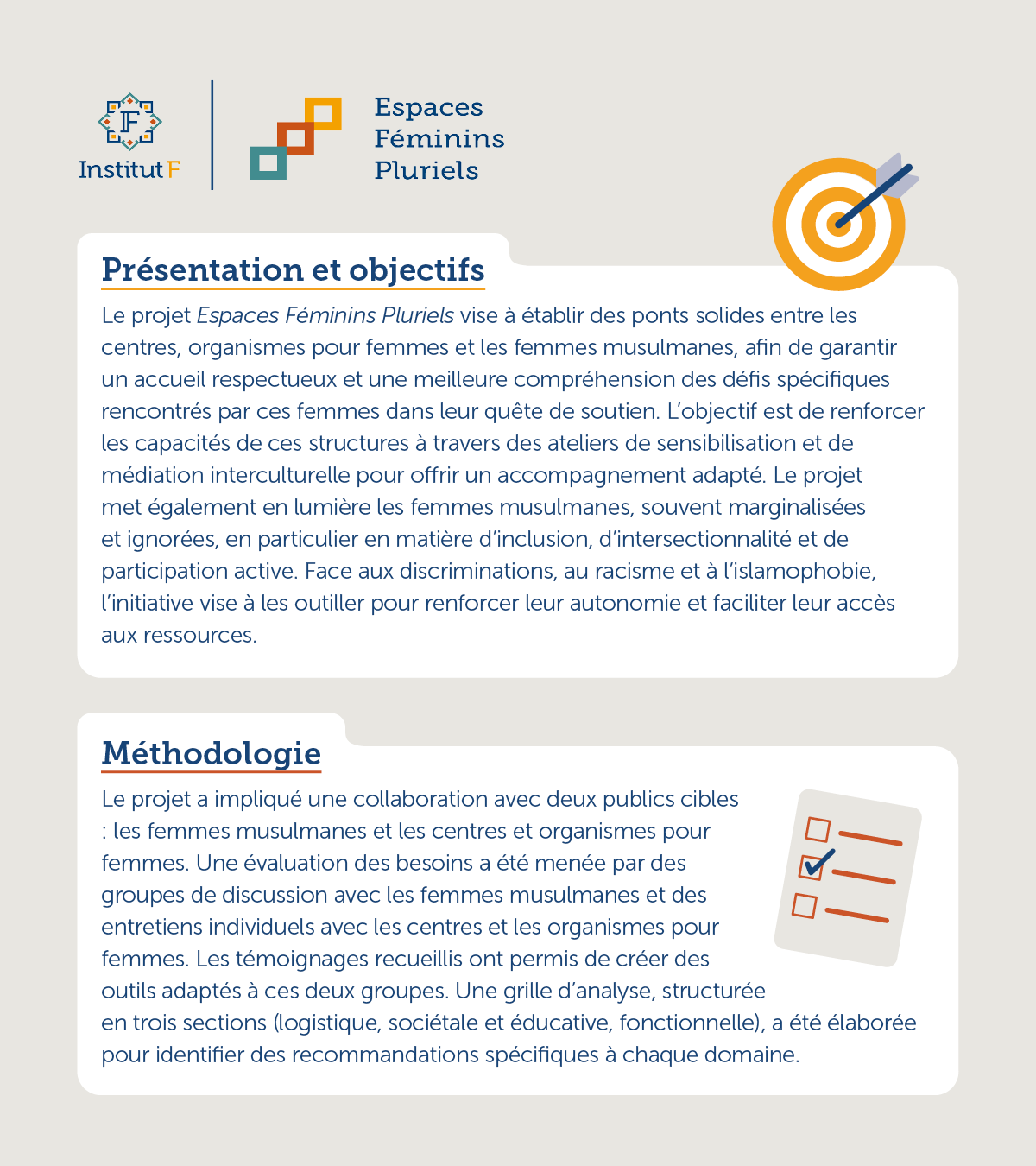
The Plural Women Spaces project aims to foster solidarity-based connections between women's centres and organizations and Muslim women, ensuring they receive respectful, dignified support tailored to their realities.
.png)

AYA'S JOURNEY
As part of the Plural Women Spaces project, we are proud to present a series of video capsules that bring to life questions of intersectionality, solidarity and gendered Islamophobia. Through these capsules, you will follow Aya, a young Black Muslim woman who wears the hijab, as she navigates daily life amid the prejudices, silences and hardships imposed by a society that still struggles to see the full richness of her identity. Her story is also that of so many others. A story of resilience, of questioning... and of solidarity yet to be built.
Video capsule 1: The step Aya had to take
Aya pushes open the door of a women's centre. She is looking for help.
Will she truly be heard? Understood? Welcomed as she is?
Thank you to Studio Les Récidivistes for this wonderful collaboration!
TOOLKIT
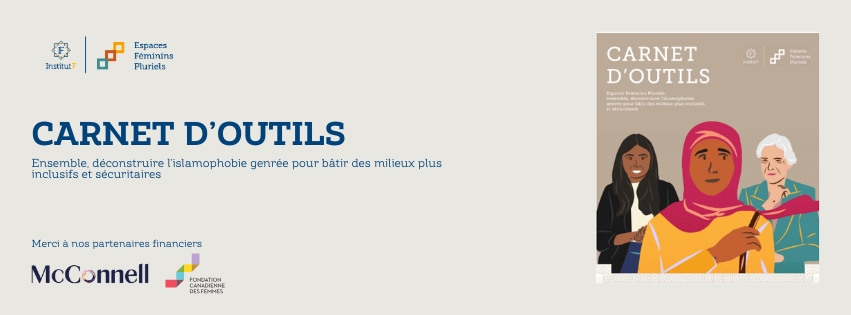
How can we think about solidarity when oppressions intersect? How does Islamophobia, when it specifically targets women, intersect with sexism, racism and other power relations?
We are proud to present our Plural Women Spaces toolkit, designed to deconstruct gendered Islamophobia and to support the creation of truly inclusive and safe environments.
This toolkit offers:
- Theoretical grounding to understand how Islamophobia is experienced differently depending on gender, and how it intersects with other systems of discrimination
- Exercises to do alone or as a team: from individual self-reflection that questions one's own representations, biases and practices, to transforming living, work or activist environments
- Concrete ways to build spaces where Muslim women, and all women, feel safe and fully included
This toolkit is intended for collectives, organizations, work teams and individuals who wish to move, with rigour and humility, toward fairer and more solidarity-based practices.
Because deconstructing gendered Islamophobia is work we do together.
ANALYSIS REPORT
This analysis report examines the challenges and needs of our two target audiences to better understand barriers facing Muslim women in accessing women's centers and organizations. By exploring the lived experiences of these groups, we seek to identify systemic, cultural, and organizational barriers that may limit their participation. The goal is to develop concrete action pathways and practical recommendations for making these spaces truly inclusive, safe, and welcoming. Ultimately, this analysis aims to enhance service accessibility and create environments where all women, including Muslim women, can fully thrive.
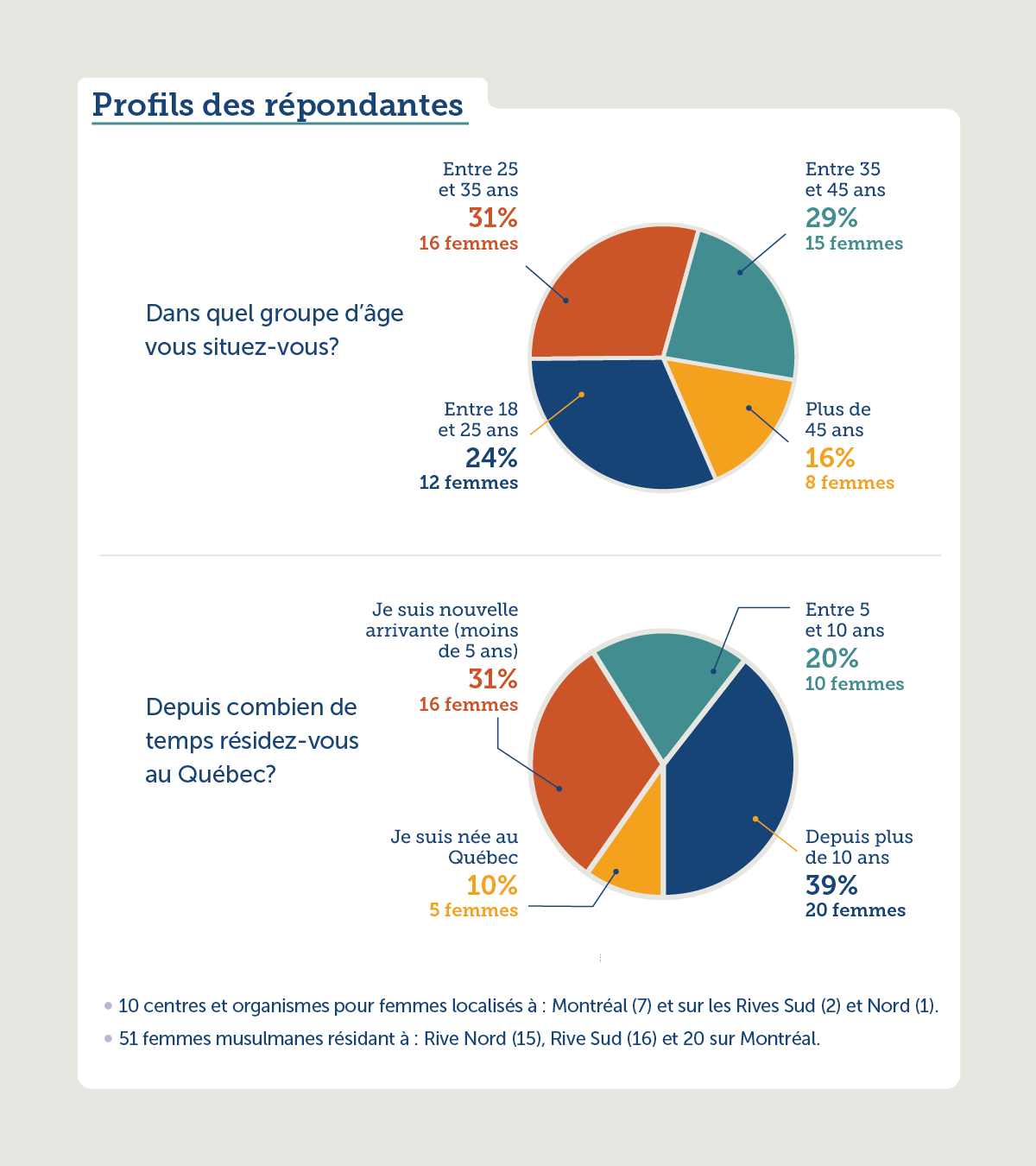
Before exploring the summary sheets, let's take the time to situate the project as a whole: What are its objectives? What methodological approach was adopted? What data was collected from participants? These elements form the foundation of our analysis and ensure that our recommendations are grounded in the real needs expressed by the women concerned.

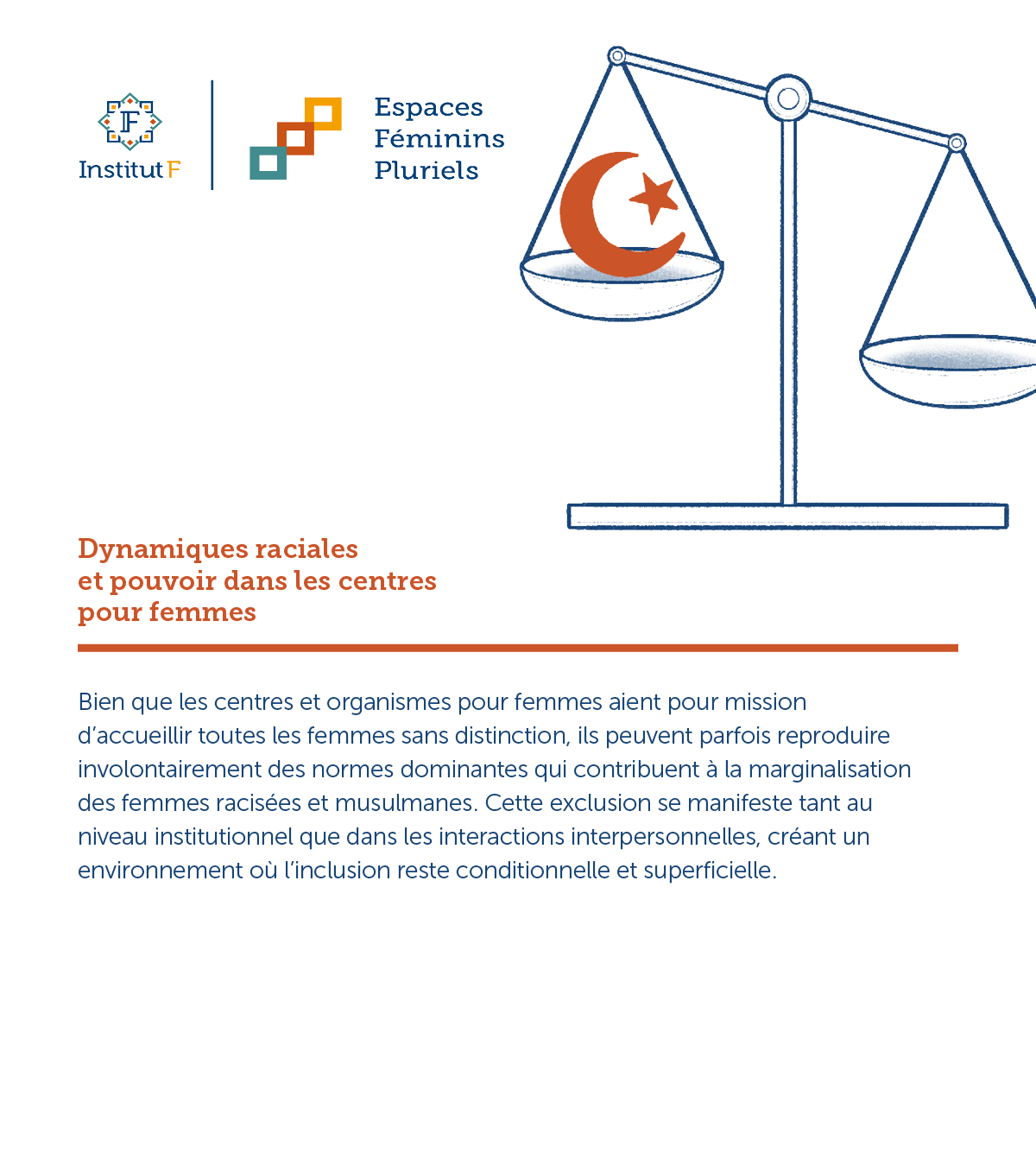
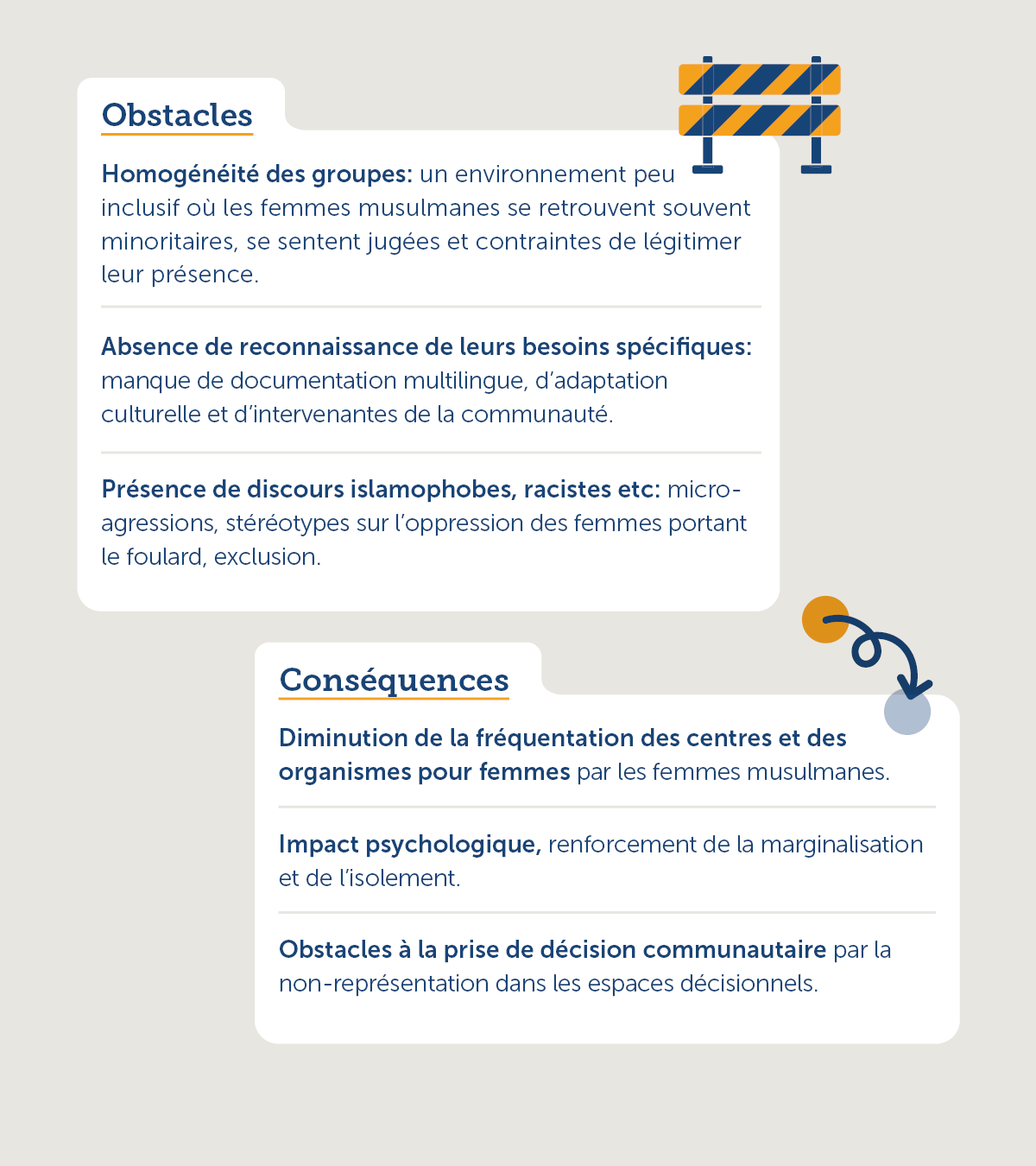
Although women's centers and organizations aim for universal inclusion, they may inadvertently reproduce dominant norms that marginalize racialized and Muslim women. This exclusion manifests both at the institutional level and in interpersonal interactions, creating an environment where inclusion remains conditional rather than truly transformative.
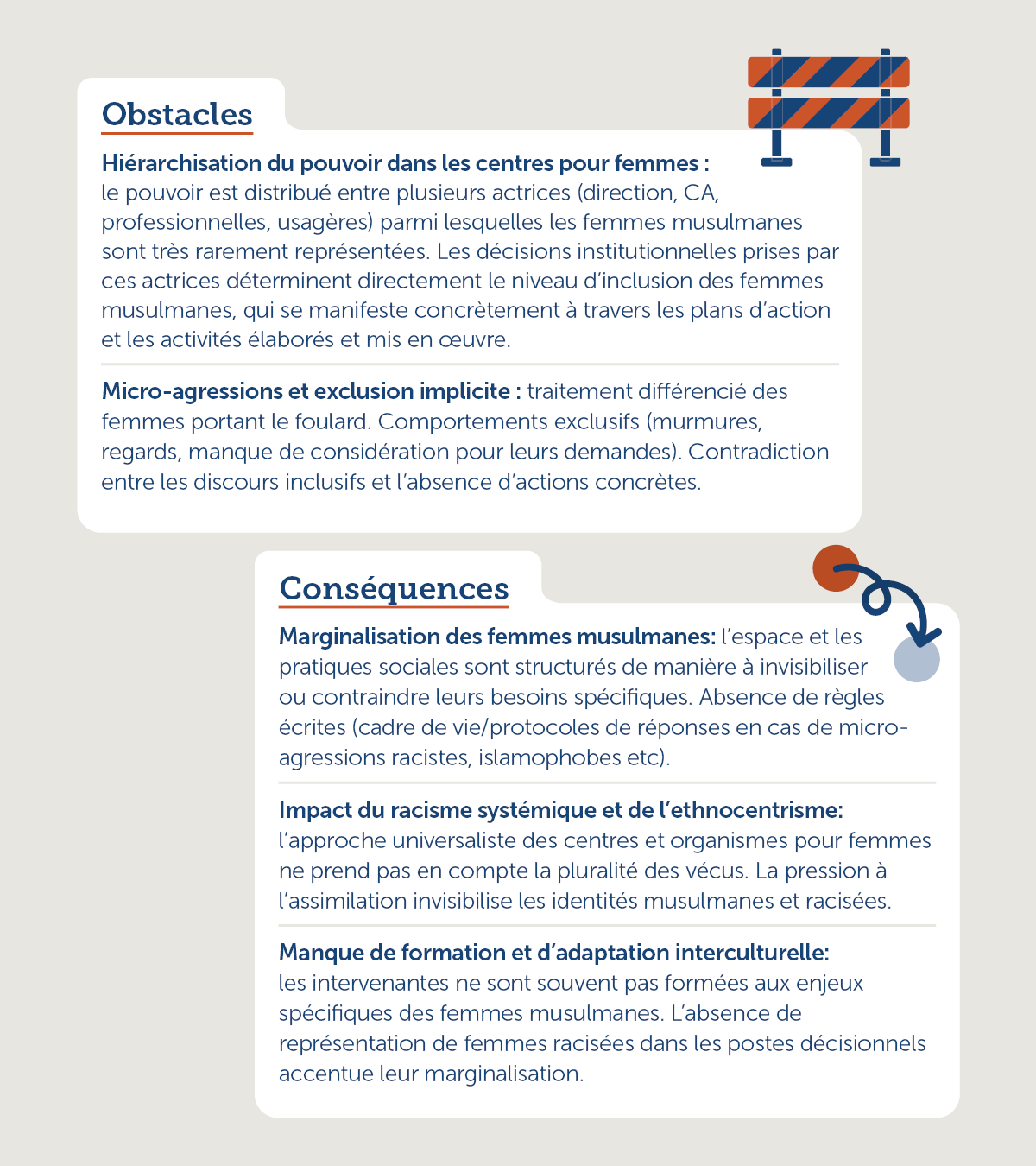
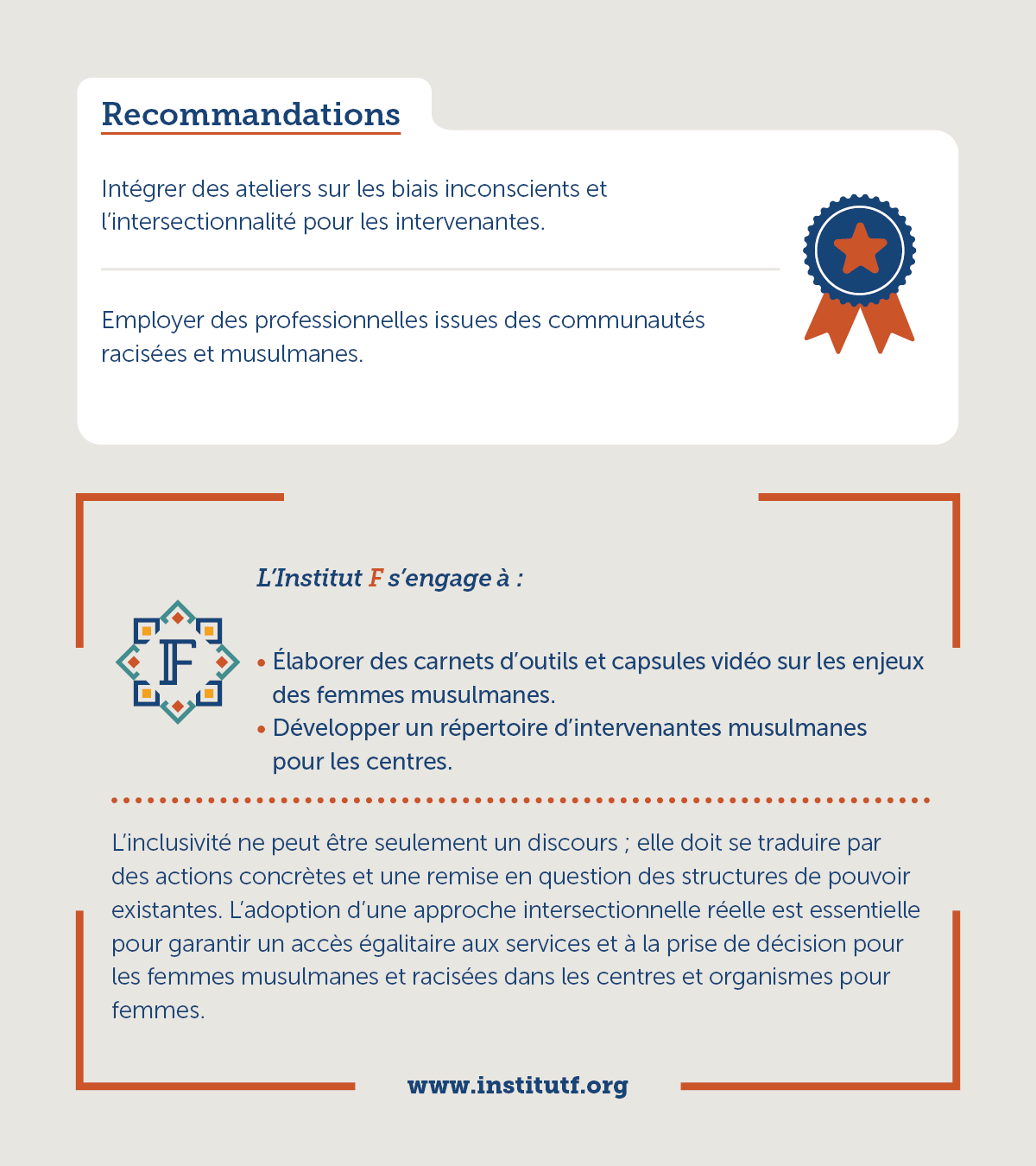

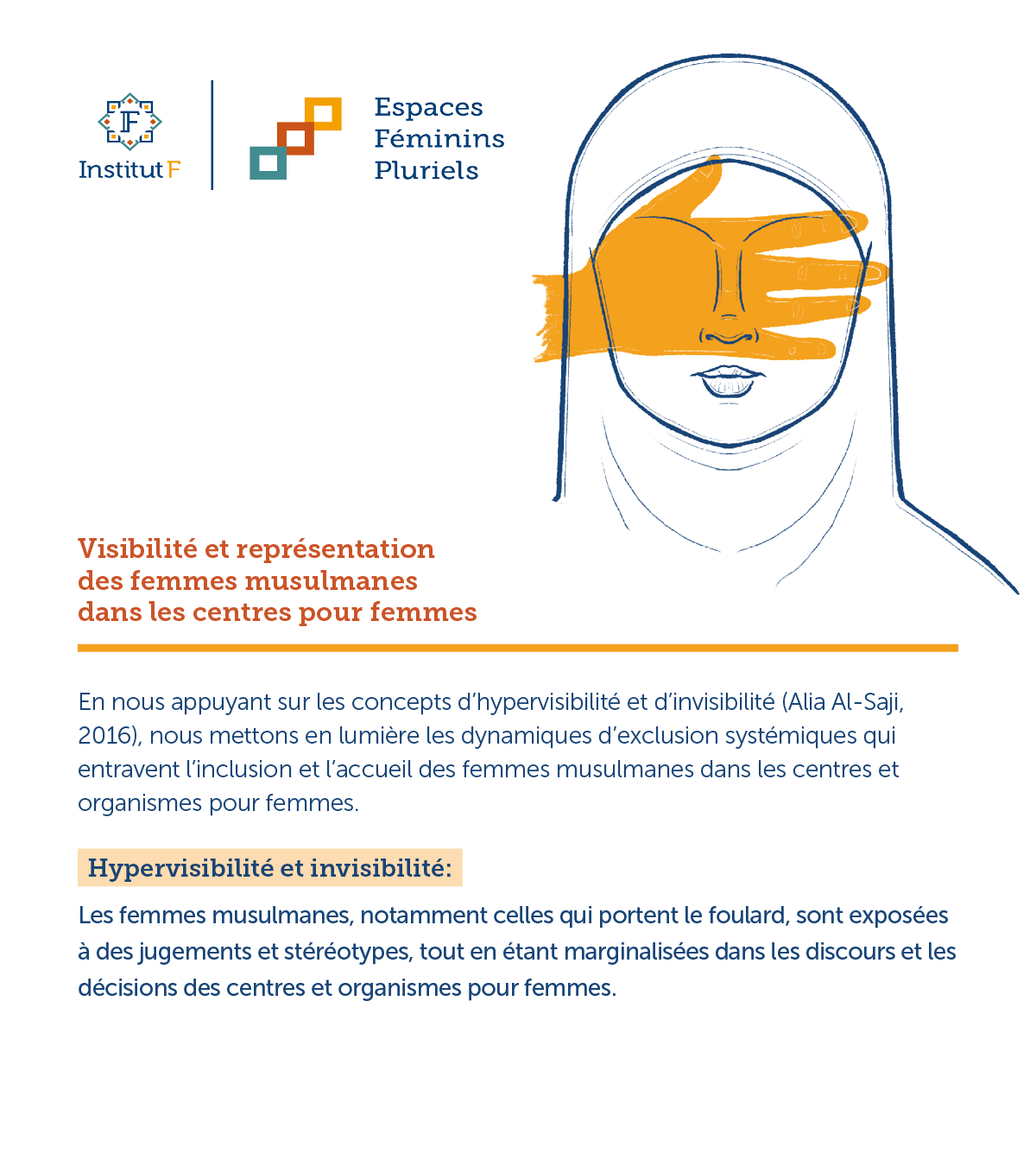
Muslim women, particularly those wearing the hijab, face persistent judgments and stereotypes within women's centers and organizations. They experience a double marginalization: their voices are minimized in decision-making spaces and their realities are often rendered invisible in institutional discourse, thereby limiting their full participation.
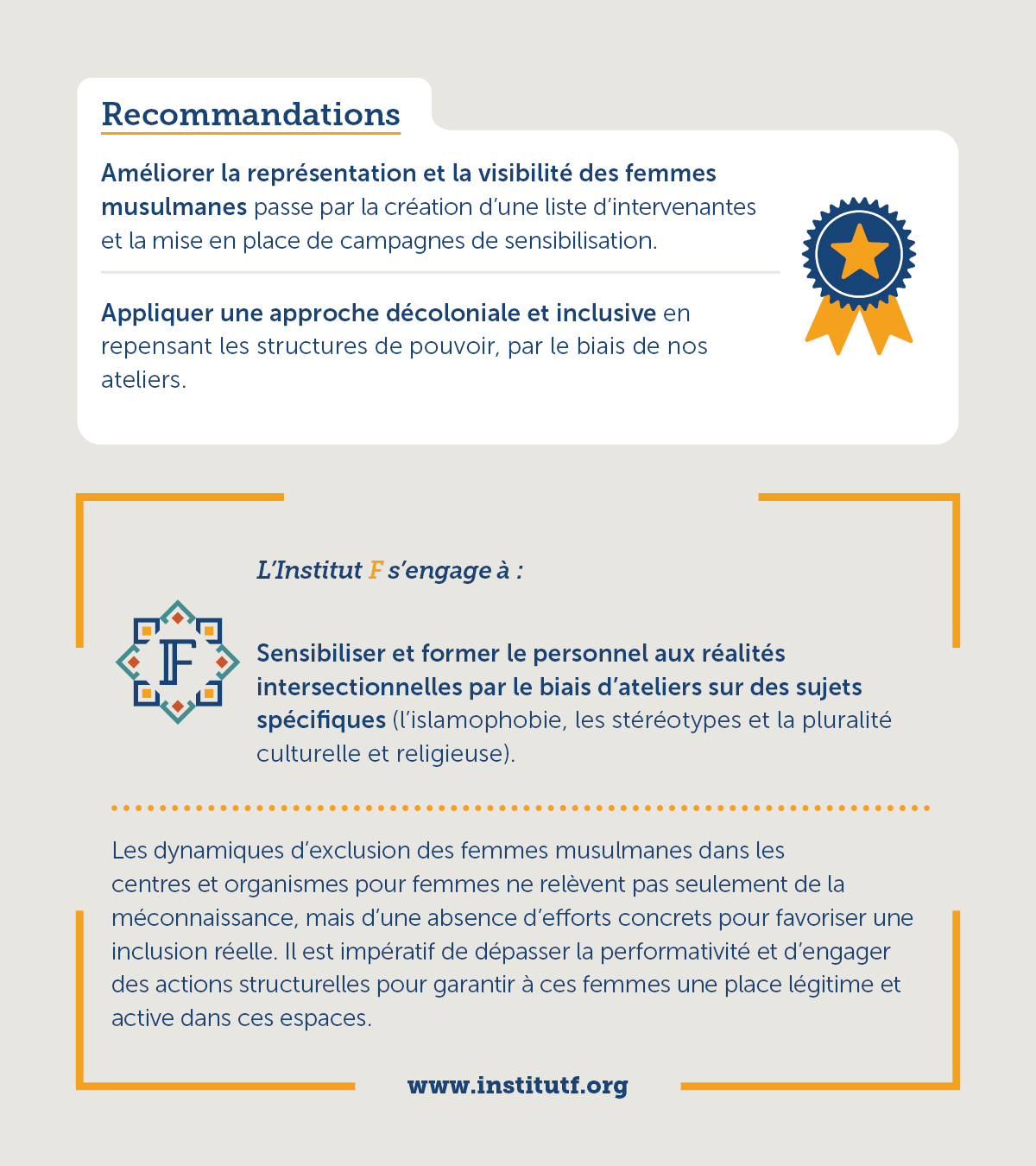

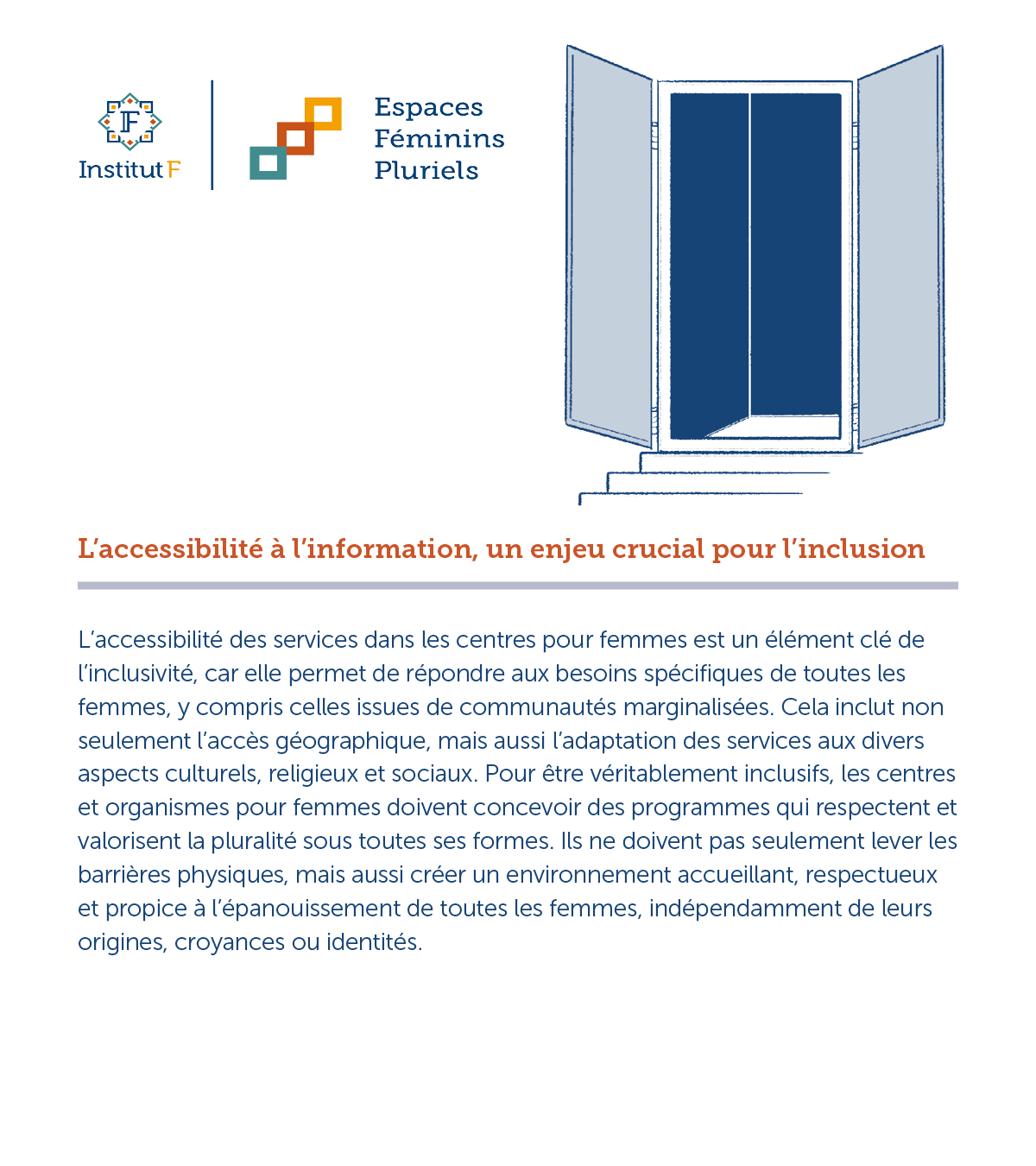
Access to services in women's centers is a key element of inclusivity, as it makes it possible to meet the specific needs of all women, including those from marginalized communities. This includes not only geographic access, but also the adaptation of services to the various cultural, religious and social dimensions.
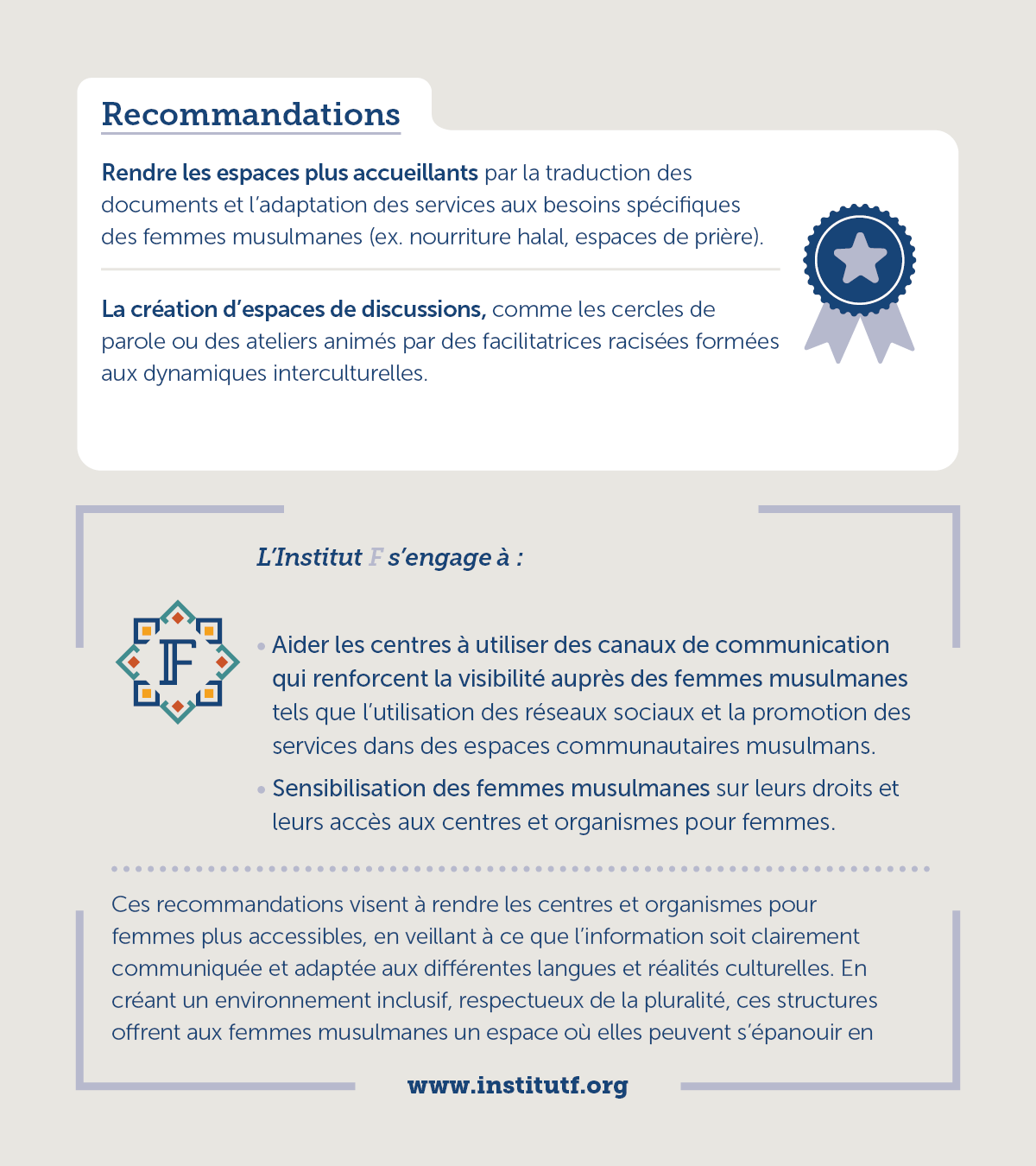
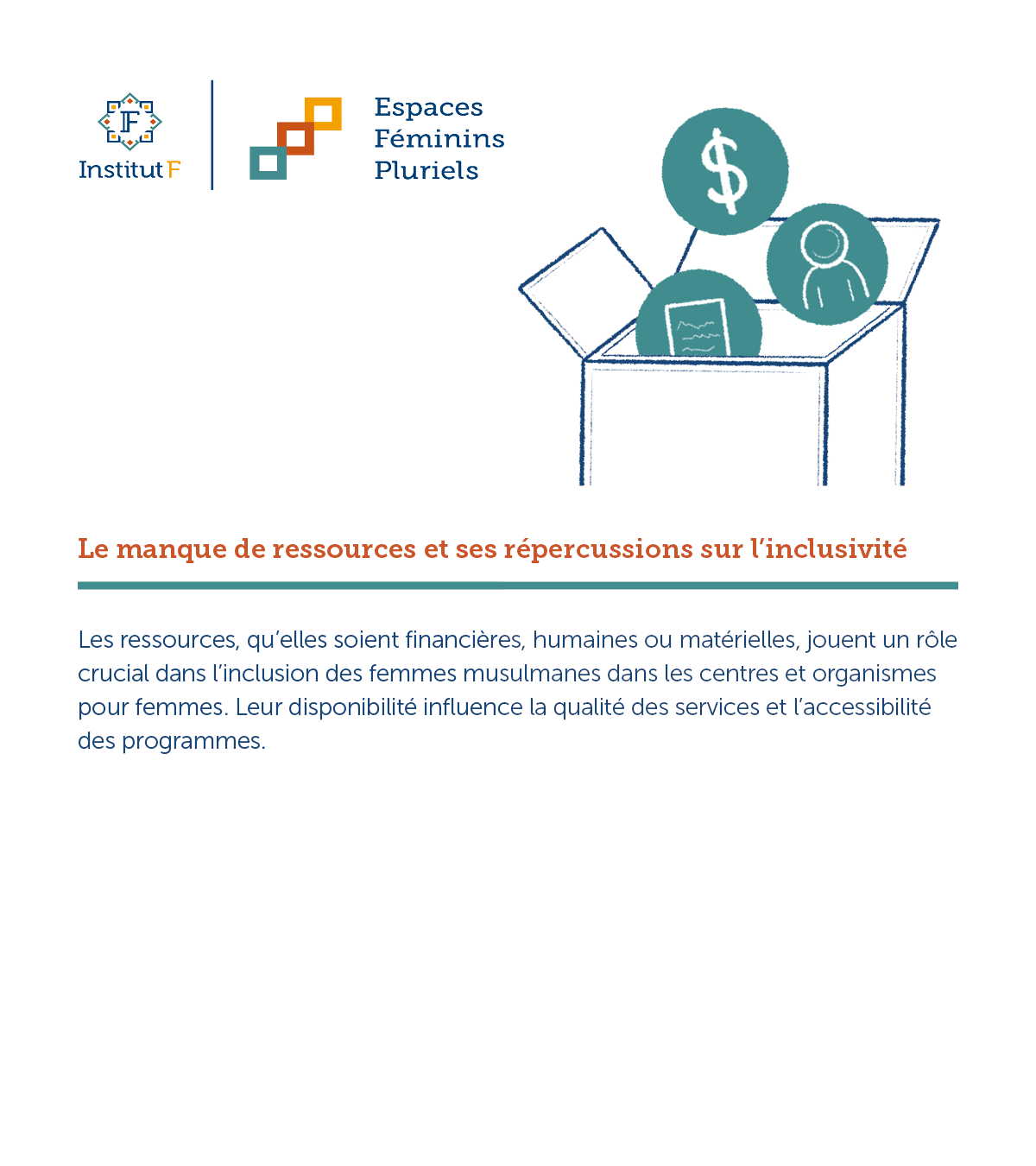
Resources, whether financial, human or material, play a crucial role in the inclusion of Muslim women in women's centers and organizations. Their availability influences the quality of services and the accessibility of programs.

DISCOVER OUR PARTNERS
We thank these partners for the essential funding they have granted us, which
allows us to pursue our mission.




Q&A
Explore answers to frequently asked questions about our programs and initiatives.
You can support our initiatives and programs by making a donation or becoming a volunteer. Each contribution helps to promote the empowerment of women and youth. Together, we can build stronger communities.
Our activities take place in various community venues and online. We strive to make our programs accessible to all. Visit our website for more details on the locations of our events.
You can contact us by email. We remain at your disposal to answer your questions and help you. Do not hesitate to let us know your concerns.
Support our mission now!
Your contribution helps to build inclusive communities and promote equal opportunities.